
The Pulse of the Capital of Afghanistan , News for the Afghan Nation
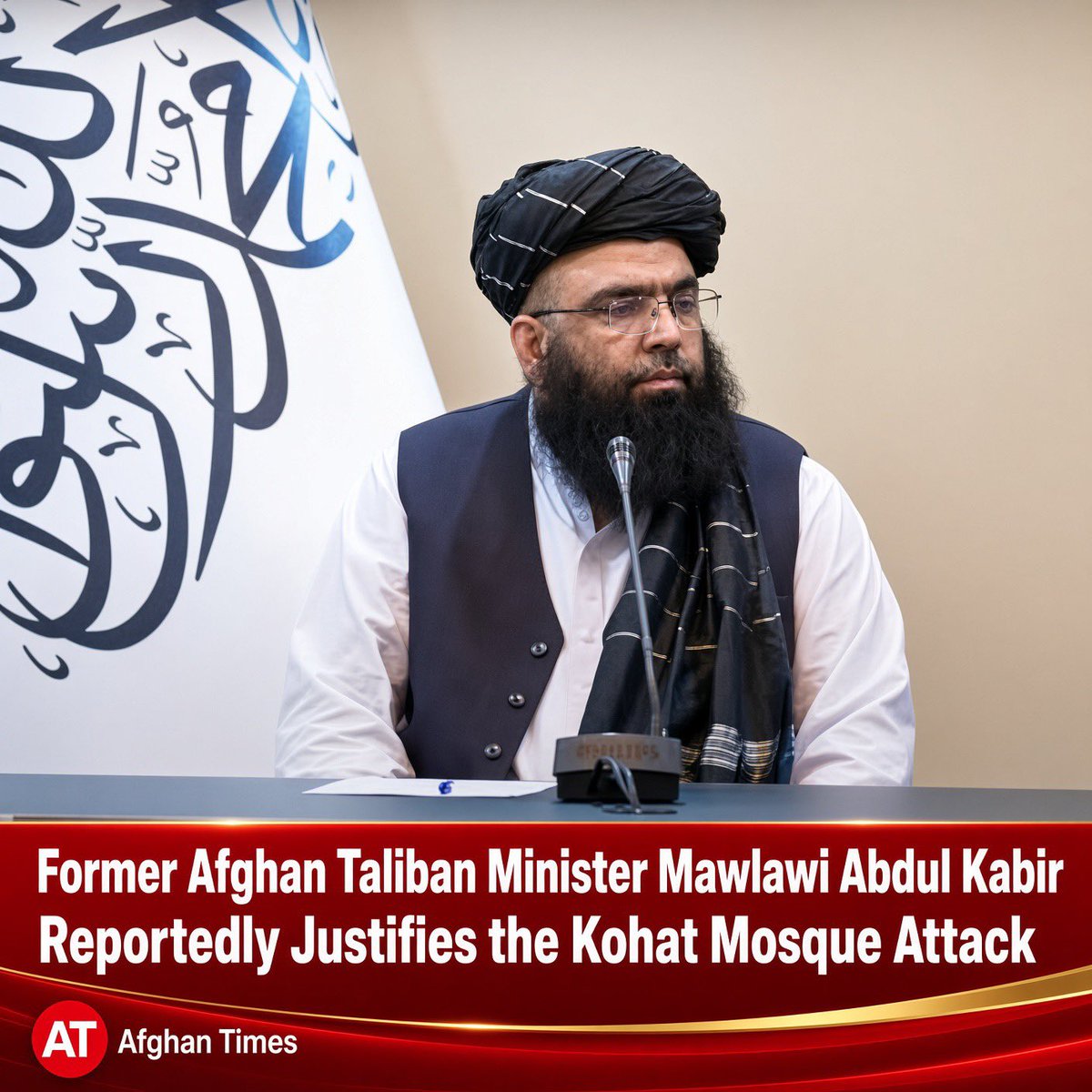
"Former Afghan Taliban minister Mawlawi Abdul Kabir reportedly justifies the Kohat mosque attackKabir described the attack as justified, claiming that jihad against Pakistan is permissible even inside mosques, while praising the militants who carried out the attack. https://t.co/ebAxpW6jAq"
The recent remarks from Mawlawi Abdul Kabir, former minister of the Afghan Taliban, have ignited a storm of debate regarding the implications of justifying violence in places of worship. During a public statement, Kabir defended the attack on a mosque in Kohat, Pakistan, asserting that jihad against Pakistan is permissible even inside such sacred spaces. This provocative stance not only raises questions about the normalization of violence but also reflects on the broader context of religious extremism.
Kabir's justification of the Kohat mosque attack underscores a concerning trend within segments of extremist groups that manipulate the concept of jihad to promote their agendas. By praising the militants responsible for the attack, he not only legitimizes their actions but also potentially incites further violence. Its critical to understand that such narratives can have lasting impacts on community cohesion and the perception of Islam as a whole. Yet, it is essential to acknowledge that the majority of Muslims around the world vehemently reject such interpretations, advocating for peace, tolerance, and coexistence.
The international community has responded with alarm to Kabir's statements, emphasizing the need for global solidarity against extremist ideologies. Countries with significant Muslim populations, such as Indonesia and Malaysia, have condemned the attacks and reiterated their commitment to counter-terrorism efforts that respect the freedoms of all individuals. Moreover, organizations like the Organization of Islamic Cooperation (OIC) have called for a united front to combat the spread of extremist narratives that could incite violence, particularly in regions like South Asia.
As Pakistan grapples with the ramifications of such extremist ideologies, it is crucial for the nation to continue its journey toward peace and stability. Engaging communities in dialogue, promoting interfaith understanding, and providing educational opportunities can be pivotal in countering the narratives put forth by figures like Kabir. Initiatives that foster social cohesion and religious tolerance may not only alleviate tensions within Pakistan but may also serve as a model for other nations facing similar challenges in the fight against radicalism.


No comments yet. Be the first to comment!